Cleaning Your House to Sell

Hi, are you getting ready to sell your house? If so, you’ll find some invaluable tips here for giving it a good spit shine! This post will focus more on the where and what rather than the how–I feel another post coming on for “cleaning tips & tricks”.

If you haven’t read and/or taken the steps in my previous post “Five Things To Do Before Listing Your House“, please go back and read it and do the steps in that post before tackling your cleaning.

In the above-mentioned post I alluded to some of the sights (oh, let me just call it what it was–filth!) we saw on our house hunting expeditions. They are burned into my memory and some of them are from our most recent house hunt over the past couple years, but some are from 21 years ago! Are you grasping the importance of cleaning your house before allowing strangers to traipse through?

Story time: We toured one home and the couple had done a good job removing personal identifiers. It was a large, newer home and on the surface looked pretty clean. However, when we got to the master bathroom the floor was covered in dark hair. There was so much of it we all assumed it must have been dog hair. Imagine our surprise (and disgust) when upon our realtor’s suggestion they “clean up the dog hair in the bathroom” we learned they didn’t even own a dog! No way. If that’s the filth we saw, we had to wonder what else we weren’t seeing.

Anyway, now that I have made my point, where do you begin?

Have you ever done a deep Spring Cleaning? If so, do that times three and you’ll be about ready to open your home! Seriously, you need to give attention to items that may not have been cleaned in years, if ever!

I’m a big believer in task lists. I love the ability to see what lies ahead, but also gauge my progress as I tic things off the list. For now, though, here are the basics.

Start at the top:

  1. Clean out light fixtures that may hold bugs.
  2. Clean those bathroom fans!
  3. Dust all ceiling fans and chandeliers (including the light bulbs); wash glass globes; replace any dead bulbs.
  4. Dust all ceiling corners and make sure they’re free of cobwebs.
  5. Clean the uppermost tops of all cabinets, shelves, mirrors, furniture and doorways–dust, then as needed get out your cleaning product and remove any grime or grease. If you’re going to have items displayed on top of cabinets, dust/wash each item before placing it.

Move onto interiors:

Once you have your uppermost surfaces cleaned, move onto the interiors. You may have done this during your decluttering stage, but now is a good opportunity to do one better.

  1. Wipe out all cabinets and drawers with a damp rag. Do inside cabinet doors, the inner framework, and all shelves. If you have glass door fronts, go ahead and clean the interior of those now, too.
  2. Add/replace drawer liner paper.
  3. Replace the contents in an orderly manner (purge again, if you must). I’d suggest making sure the items you put back in place are also clean before reinstalling.
  4. Check your closet walls. Remove scuffs or repaint. At this point your closets should already be cleaned out, but check again for any extraneous stuff you can remove.
  5. Dust closet poles and shelves–yes, I’m serious!
  6. Make sure clothing, shoes, and other belongings are neat and orderly.

Side note: By now you’re probably wondering if this is all worthwhile…it is! Truly, if for no other reason than you’ll have pride in the cleanliness you created, but hopefully because it will eliminate stale odors, dust, and any inclination to focus on your cleaning skills rather than the home itself.

Now let’s get to those appliances! (Everyone’s least-favorite task!)

  1. Remove grates from inside your oven(s) and if applicable, from your range top. Also remove dishwasher baskets. Set them aside or start pre-soaking them–you’ll have to clean them eventually.
  2. Clean the inside of your oven, including the glass door; clean inside dishwasher (paying attention to the drain area because food often accumulates here); clean range top. Make sure to clean all seals, too, as they’re a great place for food, mold, or crud
  3. Wipe down the soap dispenser on your washing machine, wipe around all access points and visible seals; clean your dryer lint trap; remove any interior stuck-on items (you know, when your kids leave stickers on their clothes and they opt to come off during the drying stage–to remain evermore in your dryer); utilize a washer refresher product to ensure freshness.
  4. Remove all appliance knobs and clean them and the area around/beneath them before replacing.
  5. Pay attention to the area beneath your appliance doors–you’ll have to work at getting crumbs and crud out of this space.
  6. Do your best to clean beside and underneath appliances. Remove the lower grate/panel and vacuum what you can or a little flat duster designed for under furniture–it’s a rock star.
  7. Using an appropriate cleaner, clean the components, i.e. baking racks, silverware basket, etc. Re-install in their appropriate appliance.
  8. Tackle your refrigerator and freezer! You know the drill…throw out old items, organize and wipe down all surfaces. In stall a fresh deodorizer, filter, and bulb if needed.
  9. Wipe down all exterior appliance surfaces with an appropriate product and admire your handy work.

But, you’re not done, yet!

Now onto mid-level items:

This is where the bulk of normal cleaning falls.

  1. Time to wipe down all those cabinet exteriors, interior doors, and believe it or not, you should wipe down or wash your walls, too, especially if you smoke or have children or pets.
  2. Make sure to clean all door and cabinet knobs, light switches, and handrails.
  3. If you have glass on doors or cabinets, wash them at this step.
  4. Dust and wipe down mantels, shelves and furniture surfaces.
  5. Remove all countertop items and give your counters a good thorough cleaning. Don’t forget to clean underneath the overhanging edges too, they get a lot dirtier than you’d imagine!
  6. Tackle sinks, tubs, toilets and showers. Clean the drain stops and overflow areas. Stains and evidence of hard water are never attractive. Use products designed to remove rust stains or hard water rings. Make sure your toilet tops are clean–even under and around the connectors.
  7. Get those shower doors squeaky clean! Pay attention to the corners where scale and gunk can accumulate. (And if you have old or stained caulking, get it taken care of. A shower simply looks dirty if the caulking isn’t fresh.)
  8. Before replacing countertop items for determine if it is necessary or will be a distraction on showing day. Whatever items are staying on the countertop must be cleaned and shined!
  9. Curtains should be vacuumed or removed for washing; blinds should be dusted and wiped clean; all window sills need to be free of dirt and bugs; and all windows crystal clear.
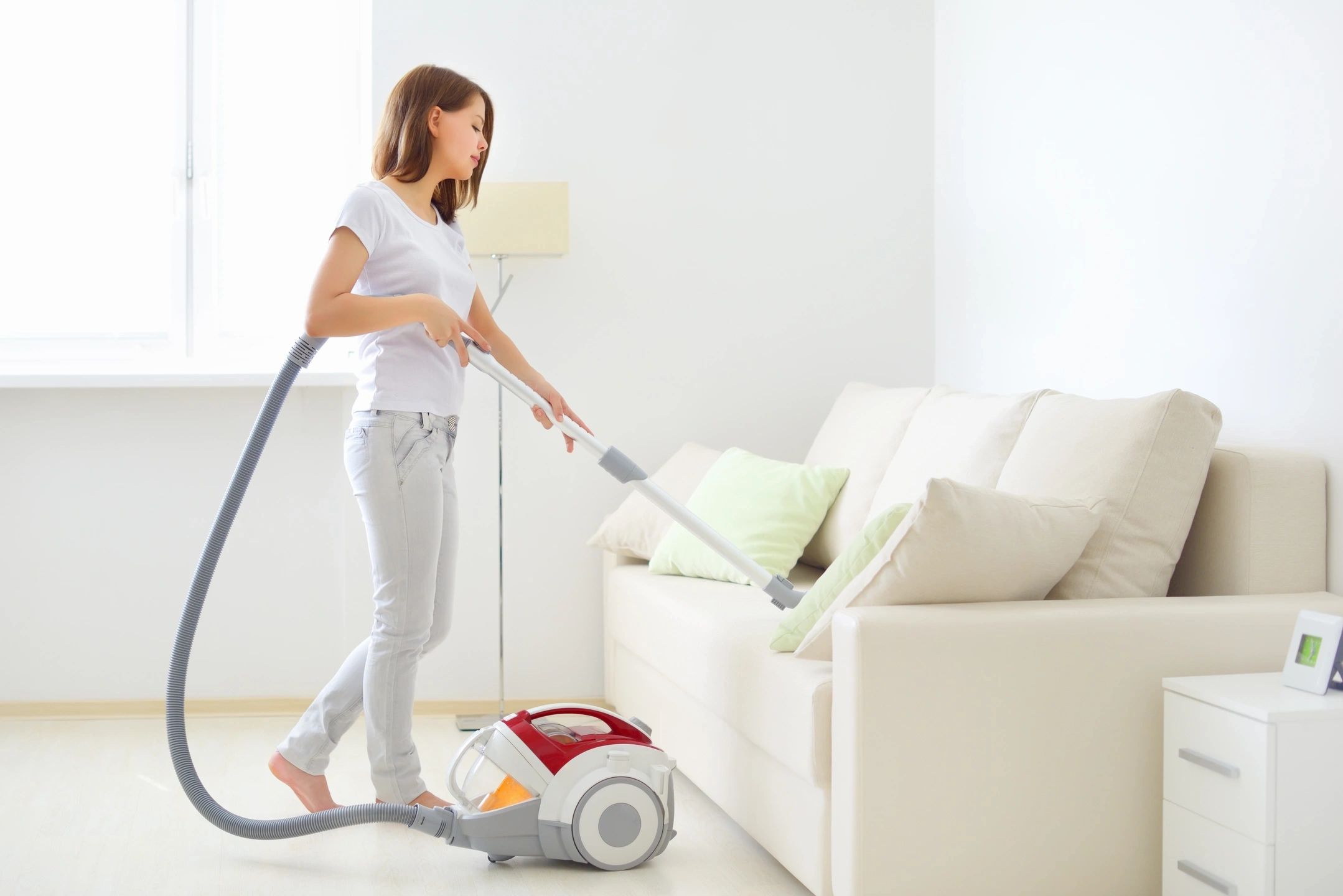
While you’ve got the vacuum out, give your furniture a good going over! The remnants of dropped food, animal dander and sweaty teenagers tends to linger without awareness.

You’re ’rounding the bend!

Onto lower level items:

The process thus far as been aimed at moving all the dust and grime to the lowest level and now we rid ourselves of that mess!

  1. Start by removing floor duct covers (and if possible, I highly recommend you remove inlet wall grates, too). Grab your vacuum hose and get those vents cleaned out as far back as you can reach. Be careful if you’re using an attachment at this step as you may have to find a creative way of retrieving it if it falls off (lesson learned here).
  2. While you have the grates out, give them all a nice bath. Let them dry thoroughly before reinstalling.
  3. If you’ve removed wall grates, put them back in before dusting baseboards because inevitably some sheetrock dust will fall during reinstall.
  4. Pick up area/throw rugs and give them a good washing or at least a shaking out.
  5. Wipe down all baseboards.
  6. Dust under all furniture.
  7. Vacuum and/or sweep all floors.
  8. Mop floors as appropriate.
  9. Replace floor grates and area rugs.

Oh, we are so close to being done!!

Next, step outside your back then front door.

  1. Wash the actual door and any glass enclosure. Look down at the entry sill…give it a scrubbing if it has dirt and grime on it.
  2. Dust cobwebs from the light fixture(s); wipe down; replace bulbs if necessary.
  3. Make sure the trim around the door–and the doorbell–are free of grime. Wash or repaint as needed.
  4. Shake out your welcome mat; sweep surrounding area.
  5. Now, do the same for the front door. Don’t be afraid to paint it with a fresh coat of paint and add a pop of color to your home!
  6. Finally…FINALLY…I want you to take a deep breath, then walk through your front door with fresh eyes. Aren’t you proud of what you see before you!?

Congratulations, you are ready to show your home to prospective buyers! Best of luck and may the $$$ flow to you!

20-Minute Chair Update

As you come to know me, you’ll find that I’m constantly redoing, moving, or otherwise changing things in our home. Sometimes they’re big changes, but often they’re small, but meaningful–at least to me–changes. My 20-minute chair update is one of those small changes that has made my day-to-day life much more comfortable!

My office has morphed about a zillion times. At one point it had carpet and a huge banker’s desk–and I still don’t know how I managed to have that in here comfortably! Right now I have two refurbished bookcases/display units flanking a small antique game table and I’m using an antique sofa table for a desk. It’s a bit narrow and sometimes annoying, but it allows more overall space in here so I’m learning to adapt.

With that desk/table I had been using a leather rolling task chair which threw off the entire French vibe I was going for. Besides, it wasn’t really comfortable. I needed a new chair, preferably one with a French feel. Oh, wait, I have a few of those! I first tried a painted on that goes with the book cases, but it was too matchy-matchy and not really that comfortable. Next I brought in my favorite one from my wine room (yes I have a wine room, don’t judge me), but it was too large. Of course, if I were to remove the big dog crate from my office I would have plenty of space, but I love Pippa’s company and Pippa loves laying on top of her crate to look out the window, so I must figure it out another way. I realized the perfect french chair was the one that I just gave to Goodwill last month–isn’t that always the way!? I had one last chair to try and just like Cinderella’s slipper, it’s perfect…nearly.

The wood tone and style go perfectly with the desk and game table. The issue was it’s a stationary chair and was a pain with my constant up and down. So, staying with the French theme, I ordered a set of the cutest little brass wheels (seen above)!

When they came I was so impressed with their quality! They’re definitely solid brass and I have no fear of them collapsing under me. Let’s see how we made mama happy with this little project…

First I pulled out the chair glides (really they’re these big thumbtack things) by slipping a putty knife under the edge and prying them up enough to pull out with a hammer.

Next I got out the drill bits and drill, then someone else took over (did I mentioned this happens all the time).

Mike had to use his fancy micrometer (right?) to measure the size of the wheel post–I would have just pulled out a drill bit that looked about the right size and if I could put the wheel post into the empty bit hole, then I’d have the right size bit. Anyway…

He measured the length of the post against the drill bit so he’d know how deeply to drill the holes, then proceeded to drill in the center of each foot. (The glides actually left a nice pilot hole so we were able to skip that step, but I’d suggest first drilling a pilot hole so you don’t split your wood).

The holes are large enough for the posts, but not so large that the wheels slip out. Mike wrapped the brass with a piece of tape, then worked the posts into the holes with a pair of pliers.

Next we screwed in the little brass screws on the collar of the wheels (sorry, forgot to get a photo), turned her upright and put her back in my office.

I now am at the right height for my table desk, but more importantly, I no longer fuss and cuss every time I have to scoot my chair in and out. Twenty minutes in the shop leads to happiness for hours!

Worst Floor Product I’ve EVER Used Part 2

Hi again, let’s pick up where we left off Part 1 (If you’ve not read Part 1, this is a saga about using a horrible floor “refresher” product as pictured):

Still having this mess to contend with and no answers, I got back to Googling.

I found people who said to try vinegar and water. I did, it didn’t work. I found a blurb about a removal product offered by the maker of Rejuvenate, but couldn’t find it for purchase anywhere. I finally called back to the Customer Service line and again reached someone no more informed about the product than my dog, Pippa, is! She took my number and email address and said something about calling the company and getting back to me. She did email me directions for removal.

She included a link to a YouTube video produced by the makers of Rejuvenate. In it they tell you to use their removal product. Argh! You know, the one I cannot find for sale anywhere! She also included alternative instructions, which included this line:

“Also, please ensure that you use an Ammonia-Free Glass Cleaner to remove our product safely.”

Well, back to the store. I purchased three bottles of AMMONIA FREE glass cleaner and two scrubbies. I came home and set to work. It did nothing. Nothing, but give my arms a good workout. Back to Google.

I now found others who had success with Scotch Brite, the red pad. We use Scotch Brite a lot around here and have green, red (maroon) and brown. I started with green, as it’s the least abrasive.

Despite my efforts and the support of my glass of wine, I didn’t get the job done, so I figured I’d move onto red (maroon), what could it hurt? Oh, let me tell you what it hurt…it removed most of the Rejuvenate, but took with it some of my original finish!

Remember early on I said I wanted something to SAVE ME TIME? Hahahaha, who was I kidding? Hardwood floors are gorgeous, but they require TLC and I tried to shortcut which has backfired horribly.

It took me two days on my hands and knees with my AMMONIA FREE glass cleaner, Scotch Brite, and a mop/towels to get the floors reasonably free of the Rejuvenate. Now they look like 100 year old floors that have been abused.

The only thing left to do was pull out the sandpaper and remove the rest of the original finish. Another day of work sanding and cleaning…my body is aching and my attitude sucks!

Once I finished that step, I took yet another trip to the store for polyurethane, an applicator pad, and mineral spirits. I think by now I’m up to nearly $200 from the initial purchase of Rejuvenate, plus all the repair items. My attitude is getting worse.

I had Mike drop Pippa off at doggy daycare for the day–another $25 cost added to the projects–so I could lay down the polyurethane. I started out strong–after knocking my water over onto the sanded floor–and got the first coat on the kitchen, hallway connecting to foyer, and about 1/3 of the foyer (having to do it in a way we can still have at least some access to the house and exit). Somehow the head came off my paintbrush, so while the first coat was drying I ran out for a new paintbrush and did my grocery shopping. I came home and was already happy with the results!

After the first coat dried sufficiently, I started on the second coat. You know when you’re tired, but just need to push through? And you know when you do that, sometimes things go awry? Yep, that’s the way the afternoon went.

I hadn’t seen the cat since early morning and assumed I had him locked in the basement. I finished most of the first coat and had to open the basement door to do the landing area. Now, I don’t know if cat was in the basement or felt he needed to get there, but all of a sudden he appears…walking through the newly laid down polyurethane! I’m a good 15′ away and when I yelled at him to get off the floor, he sat down. Yes indeed, sat his big furry ass right down in the wet polyurethane! Of course I had to get him. I walked as gingerly as possible–in my socked feet–across the wet finish. I slipped before I got to him. I grabbed him, took him to the utility room and cleaned him up as best as I could. Luckily for him and not so much for me, he left behind his fur on the floor and had little poly on his rear end. After I cleaned his feet (also a joy), I went back to the floor. I wiped up the cat hair, then quickly went over several feet and paw prints, and one cat ass print, with fresh poly and hoped it would be ok.

By now, exhaustion had set in and the fumes were making me dizzy. I decided to run out to pick up dinner and the dog. As I went to leave, I realized my cellphone was squarely in the center of the kitchen island. It was literally marooned for the next 6-8 hours. I returned home, opened a bottle of wine and sat in my wine room until Mike came home. With my feet up, a glass of wine and my faithful companions by my feet, I knew that the day threw a lot at me, but I survived and learned a few things. It’s always about the lesson. And the wine. Mostly the wine.

We suffered through the night with windows partially open and ceiling fan going, and hoped we didn’t succumb to the fumes! I was thankful to awake–albeit at 4am–this morning and to assess my progress after taking Pippa out. Not bad at all! There are some spots to be touched up–including about a dozen paw prints and one big foot print–when I do the rest of the rooms. Oh those words made my stomach churn.

I looked around and realized I am about 1/3 of the way done with this disaster. I returned to Google, hoping for a miracle and guess what? I found one! I found an obscure thread written by someone who does truck repair and he mentioned using this product and having to remove it. Would you like to take a guess at what he used? Let me tell you–and you might as well envision me yelling and thrashing my arms around because that’s how I want to say this…

He used Windex. Yep good old fashioned Windex which HAS ammonia in it! That’s right, the ammonia breaks this $*#( down in minutes!!!! I sprayed about a 3’x3′ area, let it set for 4-5 minutes and took a damp towel across it. Sure as sugar, my towel was covered! I continued using clean areas of the towel until the spot was back down to my original finish!

While this makes me EXTREMELY happy, the issue is now that I’ve applied fresh poly on part of the floor, I have to continue because the abutting areas obviously haven’t been done.

I was going to forge ahead today and get the rest of this crap off the floors, but you know what? I’d rather make some cookies and go out with friends this afternoon. The floors will get done, the house will get back on the market all in due time. Right now, my truest hope is that NOBODY else will have to go through what I’ve had to endure!

NOTE: Part 1 and Part 2 are reprints from a prior blog I had…guess what, there is a Part 3 coming in the next couple weeks!! This is the product that continues to haunt me!

Worst Floor Product I Have Ever Used! Part 1

I’m a total do-it-yourselfer. I’m not afraid to tackle almost any indoor project. I’ve painted, plastered, ripped out and installed tile and flooring, replaced bathroom vanities, cut and installed ship-lap, applied and removed more than my share of wallpaper, and a couple years ago I singlehandedly took on the task of refurbishing our oak flooring.

Our floors were time-worn and showed the evidence of raising two children and having multiple pets. We were preparing for our son’s wedding and having a houseful of guests. I wanted things fresh and clean, so I waited for a week when The Mr. was away and dove right in.

It was more challenging than I anticipated! I believe the worst of it was a) trying to unload, by myself, the gigantic sander I rented from Home Depot, and b) moving large/heavy furniture, again solo. The sanding was beyond messy, despite the rental associate promising me the bag would collect 95% of the dust. Well, that is only true IF your bag doesn’t have a 4″ hole in it–which wasn’t discovered until I was 90% done!

So, lots of sanding and cleaning, and more cleaning and finally I was ready to apply stain. I let that dry the requisite amount of time and then proceeded with a oil based polyurethane. I did apply the suggested two coats and the floors looked amazing. I was so very proud of my efforts and proceeded to enjoy the refreshed floors for almost three years. Lately we’ve noticed a few worn areas by the back door which is our main thoroughfare and in the area between the kitchen sink and stove. The floors weren’t bad, but not at their best.

Knowing what I know about the amount of effort involved to do a total re-screening of the floors I started investigating some “rejuvenating” products for hardwood floors. I read a plethora of reviews on a variety of products. I settled on one with mostly RAVE reviews and a few vague bad ones. This product was available locally and was simple to use: clean with the requisite cleaner, let dry, squirt some of the finish product on the floor and spread with a microfiber mop to set, then let it dry 45 minutes.

The first stomach clenching moment didn’t come until the product dried. It was then I realized it was a high gloss, almost plastic looking finish and not the semi-gloss I expected. However, it looked good and the floors seemed refreshed…or in this case Rejuvenated.

They looked good for about three days and then it all went south!

This product, Rejuvenate All Floors Restorer is recommended for hardwood, tile, vinyl and other flooring. And it does work, but only recommended if you live in a show house and never actually walk across your floors!

Right away we noticed scuffs where the dog ran across the floor and slid. Not scratches–although I’ll come back to the scratches–but as if someone dragged a rubber eraser across the floor. I tried rubbing it off as it appeared to be on the surface, but that didn’t work. While I was at floor level looking at this scuff, I saw where our shoes and sliding a chair into the table and basic living had also left scuffs from one end of the room to the other. Even more disturbing was the fact that the product touts “filling small scratches” as part of the outcome. What it actually did was highlight every single cat, dog, and furniture scratch from the past 20 years! Wooden floors develop character over the years, but this product made them look absolutely horrible.

What was a slight denigration in floor finish now was a big problem. I created the problem, I had to figure out how to fix it.

I got online and tried finding a solution. I called the company’s customer service line–which is outsourced–and it was suggested I simply reapply product over those areas to help blend it in. The CS agent seemed to be grasping for solutions, but it was the best I had. I did as she suggested; it didn’t work. I still had a problem to fix. Yeah me.

The rest of this story is quite long, so I’m going to stop here and pick up the saga in my next post.

Five Things To Do Before Listing Your Home for Sale

Selling a home is both an exciting and a stressful time. Before or at the time of listing your home for sale, you will hear–usually unsolicited from everyone you encounter–what steps to take to ready your home for resale.

With my years of interior decorating and staging services, I can help you focus on the most important aspects. There is no one-size-fits-all approach to preparing a property, because each property will have its problems and appeal, and each locale will have different expectations. However, there are some basics, so let’s cut to the chase and talk about those!

First and foremost, you want your home’s condition to be in the best possible shape. Understandably, sometimes big-ticket item repair or replacement is needed, but unrealistic because of budgetary constraints. If that is the situation you find yourself in, admit the home needs attention and set your price accordingly. If you have allowed the structure or mechanical aspects of your home to deteriorate, and you have the budget to fix them, then attend to them and know you may not get 100% return on dollars invested, but you will eliminate some red flags for buyers.

Tip: Snap photos of every area of your home, then look at them with an outsider’s perspective. Notice what areas/items need attention.

Make sure you have curb-appeal appropriate for your locale. The exterior should appear fresh and well maintained. If nothing else, make sure your front door is in good shape and inviting–try a pop of color! If you have landscaping, freshen it up, plant some fresh blooming plants, and create a sense of vibrancy for the home. If you have nothing more than a front stoop, you can still add color with potted plants or baskets. If you’re lucky enough to have a front porch, maximize its appeal by creating an inviting lounging space. Don’t forget a cheery welcome mat, too.

When prospective buyers enter your front door, you want them to be embraced by warmth, space, light, and a sense of welcoming. If you have a coat rack full of your own things, move them to bedroom closets. If you have shoes everywhere, put them away. If you have room for a little bench or table, set it up so buyers can see themselves or guests walking in the door and having a place for their things. And, this is so important– you need to come in and out of your own door a few times and/or enlist the help of friends…what do you smell when you first walk in the door? We tend to become immune to the smells of our home and may not realize others are unpleasantly bombarded with the smells of our daily life. Don’t overdo the air freshener, but a subtle cinnamon goes a long way to overcoming odor and also creating a sense of home.

As you progress through your home you want to see it from an outsider’s eyes. I did faux finishing for clients for many years and my house was a sales tool and became a canvas of faux. Faux is now pretty much limited in its use and not everyone is a fan. I also adored the bright red-orange of our guest room, but to others it was jarring. It was incredibly hard for me to admit, but it was time to neutralize decor. Not only does this mean repainting, I also put away 75% of my personal items and you’ll need to do the same. I now have a neutral space, a fresh canvas for someone new, and have a better chance at getting top dollar for our home. Remember this is what you’re going for, too. It is hard stepping back and seeing the space you’ve created revert to neutrality, but it’s a necessity.

As you further neutralize your decor–putting away your personal items–you’ll also start the process of decluttering. Sure, my collection of animal head towel racks made ME smile, but those, along with the farm animal art created a really cluttered feel to the kitchen.

You’ll notice with the elimination of those, along with lighter, more contemporary fabrics, how this space seems larger and more updated. If I were staging this for sale, the stained glass would come down, the rug picked up, the plant and other counter items would be removed, and a single floral arrangement would be placed on the table to create some neutral vibrancy.

There are a bevy of little tricks, my friends!

Onto more decluttering…

One thing we love about our home is that just about every piece of furniture, every collectible, and even our artwork has a story. That’s important to US. What’s important to buyer’s is the SPACE. Probably one of the hardest tasks is this depersonalization and decluttering, but it is one of the most critical steps in prepping a home to sale. I have had clients nearly in tears when I mentioned removing some favorite pieces, but when they saw the effects they got it and were thankful for my eye. When I had to do it myself, I understood the emotional attachment. Just keep this in mind: You’re making short-term decisions designed to move you forward.

Decluttering falls into a couple categories:

  • Garage/basement/storage areas–you want them to appear large, clean and usable for their designated purpose. Utilize stackable tote bins when possible as they contain the clutter, but also make for easier moving.
  • Closets/cabinets–every buyer wants places to store their own clutter, so remove as much of yours as you can to showcase the potential in closets and cabinets. Whenever possible, remove all clothes/items from a closet. If that’s not possible, be sure to pack away all out-of-season items and create as much space as you can. For entryway closets, only the bare minimum should remain–you need one coat or jacket at a time, so put the others away.
  • Shelves/open spaces–this is where we all want to display our photos, our collections, and the things that make our home our home. Again, there is nothing wrong with showcasing a few items to highlight the space, but no personal or family photos, don’t leave your (perhaps odd to others) collections out. Create little vignettes–odd numbered items are more pleasing to the eye.
  • General living spaces–There is a huge difference between living in a home and showing a home for sale and nowhere is it as obvious as in the furnishings. They are physically and visually the largest space thieves. I encourage you to go room by room and eliminate anything not serving a specific purpose. Sometimes you’ll even need to eliminate items that do have a purpose, but can temporarily be lived without or exchanged for something else in order to create more flow. In our day-to-day life we have an upholstered ottoman on wheels. The cat and dog love to lay on it, we use it to toss our throw blanket across, and it’s home to my iPad, books and magazines. When we list our home that’ll be moved to the basement and in its place I will put a mercury glass-topped table because with its open design and light-reflecting surface it will create an illusion of more space. It will be a pain, but no pain, no gain!

As you approach each area take time to create piles: a pile to keep and use; a pile to keep and store away; a pile to donate; and a pile to throw out. Be realistic! If you’re holding onto items that you truly do not need, use, or love, they need to go. When you think you’re done, grab your camera and snap a few new photos and look at them critically. How are things looking to the outsider? Do you need to have another go at it?

The final step in prepping your house to list is to clean it! I’m not exaggerating when I tell you some of the filth we saw while house hunting had me reaching for sani-wipes and wishing I had a mask! Listen, I do not care how you live, that’s your business. My business is helping you get your home ready to fetch top price and if you ignore every single other step, do not ignore this one. If you aren’t able to clean yourself, get help through family, friends, or hire a cleaning service.

In fact, this cleaning step is so important, I think it deserves a blog post of its own, so I’m going to say no more about that for now.

Armed with this list of top items to tend to, you can now get started. I would suggest you create a master list. Do not be alarmed if your list is several pages long! We work on our home constantly, yet I have a three page typed list of tasks to do before listing. I went room by room and listed each thing needing my attention. It can be overwhelming, but very satisfying when you start crossing things off!

Hint: Now that you’re ready to list, photos will be taken for your listing. While I encourage seasonal decor/flowers, I caution their use until after your photo session. Your home may sell right away, but it may also be on the market through several seasons. Nothing says “stale listing” like seeing photos with out-of-season decor.

Grab your notebook, pen and camera and get started. Preparing your home to show in all its glory takes effort, but that effort will pay dividends!

No Way This is Squash-based!

I love squash. Really, I love it. I like summer squash, butternut squash, zucchini squash, spaghetti squash. I like fried squash, sautéed squash, baked squash, squash with onions, squash soup, roasted squash…I sound like Bubba Gump when I get going on about squash!

Anyway, I do love squash, but I have very specific ways to cook each of them and rarely do I deviate from those ways. Why mess with what you love?

I was recently preparing spaghetti squash for our dinner. And, wanting to maximize my day I decided to make it early in the morning while I went about doing my other chores. When I cook spaghetti squash I flip back and forth between oven baking it and microwaving it, depending on my schedule. While I had the entire day ahead of me, I decided to go the quick route and microwave it so I could toss it with the meat sauce and let it absorb the flavors all day.

I proceeded to prepare the squash for cooking by cutting it in half lengthwise and scooping out the seeds. I then placed the halves face down in a casserole dish, added 1/4 cup of water and covered with plastic wrap.

I popped the dish into the microwave and cooked on high for 6 minutes; when the microwave beeped after the first 6 minutes, I rotated the casserole dish and popped the squash back in for another 6 minutes. When the timer again beeped, I pressed a finger against the outer skin, but it was still very hard and had no give to it. The cooking time for spaghetti squash can vary depending on the size, and this was a large one. I added 6 minutes and restarted the microwave.

At this point, I lost track of my squash-cooking and got the meat sauce made. When I went back to the squash–which had cooked 18 minutes and spent about another 10-12 in the microwave under plastic wrap–it was overcooked. When you run a fork across spaghetti squash it’s supposed to release from the skin in strands that resemble spaghetti…mine resembled chewed spaghetti. Bummer, I had the meat sauce done, had promised Mike spaghetti for dinner and didn’t want to go back out. I opted to cook real spaghetti and threw the mush of squash into a bowl and tossed it in the fridge.

Not only was my squash a disaster, I ended up having leftover spaghetti sauce because I didn’t really read the label on the jar of sauce. I thought it said Roasted Red Pepper–and after squash, roasted red peppers are one of my other favorite foods–so I just grabbed it. Turns out it was Red Pepper, as in RED pepper…hot, spicy, not at all for me RED PEPPER! We couldn’t even eat our dinner. This was one of those meals that just went wrong from the planning stage.

Not wanting to waste the squash, I started looking for recipes. Now many of you probably already know there are many ways to enjoy spaghetti squash, but as I mentioned, I have my way and I like my way. However, sometimes life hands us lemons–or squash–and… Did you know you can make bacon squash fritters, or spaghetti squash tots, or spaghetti squash pancakes, and pizza crust? MIND BLOWN!!

Pizza crust it was. I had red peppers on hand (of course I did), leftover too-hot meat sauce, red onion, and a can of pizza sauce. I decided I had nothing to lose and certainly it couldn’t turn out any worse than the previous spaghetti attempt!

I started with a recipe I found on Pinterest from The Kitchen Whisperer.

2 cups Oven Roasted Spaghetti Squash, cooled *Note – this is measure after you squeeze the liquid. Before you squeeze the liquid, go with 3-3/12 cups prior to squeezing.

2 Tbl rice flour (can use AP flour) – *rice flour is naturally gluten free

1 large egg, slightly beaten

1/4 cup grated parmesan cheese

1/2 tsp salt

1/2 tsp oregano

1/4 tsp pepper

Instructions

Preheat oven to 400F, rack in the middle.

In a strainer place the spaghetti squash and press down to get as much liquid out as possible. You can also place the squash in a clean towel and squeeze to get the liquid out.

Place the strained squash in a bowl, add in the rice flour, beaten egg, salt, parmesan cheese, oregano and pepper.

Using a mixing spoon, mix the stuff together until well combined. The mixture will be tacky. If it’s too runny, add a Tbl or 2 more flour.

Place a piece of parchment paper on a baking sheet; lightly spray.

Dump the mixture into the middle of the parchment paper and using damp hands gently spread out the mixture into a 12” circle building up the edges to form a crust. The crust should be about 1/4-1/2” thick.

Bake for 20-30 minutes or until the crust edges and bottom are golden brown. The crust should be firm to the touch with little to no give.

You can view the full recipe at The Kitchen Whisperer by clicking here.

I followed the directions and had little success getting the moisture out pressing it in the colander so I used a flour-cloth towel and squeezed the bejeezus out of it! I also like garlic with pizza so I added 1/2 tsp of garlic powder to the squash mixture.

Once I got it relatively wrung out, I placed it on the parchment paper and made my crust, building up the edges to hold the toppings. I also cut up some red onion and red pepper, tossed it in olive oil and placed it on a baking sheet. (I decided to pre-cook the veggies because I wasn’t sure how long I could put the crust back in after it’s initial baking). I tossed the crust and veggies in the oven to bake. About this time Mike came home and exclaimed, “It smells really good in here!” Yes indeed it did.

Now, there was no way that too-hot meat sauce was going on my creation, so I had to fix it. Don’t laugh…I dumped that into the colander and rinsed of the meat (ground turkey in this case). Yep, it was just like new! I tossed a tablespoon of olive oil into my pan then added the meat. I let it sauté to get a little bit of flavor, then added in the can of pizza sauce.

When the crust was sufficiently browned around the edges and bottom, I decided to add a little mozzarella on top of it and let that melt–my theory was it would help hold it together.

Once the cheese had melted, I removed the crust and layered my sauce, cheese, and veggies and popped back into the oven for 10 minutes.

It was a gorgeous creation! Unfortunately, the meat sauce did denigrate the stability of the crust and we had to eat our pizza with a fork. The flavors were incredible and other than the texture, I don’t think anyone would believe this crust was squash-based. We scarfed it down until there wasn’t a crumb and our bellies were hurting. This was seriously one of the BEST pizzas we’ve ever eaten!

Spaghetti squash pizza just moved to the head of the class and I truly encourage you to give it a try.

The Champagne Taste, Beer Budget Utility Sink–Part 2

When we last left our hefty sink twins, they looked like the above photo. They’re vintage Kohler sinks from the 50’s, and I feel the need to bring them back to their glory!

Having picked them up in a raging snowstorm from which we were anxious to get home, I didn’t even give them a good once over. Once we got back home and Mike set them up for me to work on, I was a little saddened by their condition.

I had done quite a bit of reading and YouTube watching about cleaning old porcelain before getting them. I armed myself with just about every item and product mentioned and was ready to find the true beauty within!

There is a LOT of conflicting information about cleaning porcelain out there. You’ll see I have a bristle brush, salt, baking soda, scrubbies, Bar Keeper’s Friend, Clorox Cleanup, Greased Lightning and an array of cloths, safety gear and even some steel wool. As porcelain finishes can be scratched, I wanted to start with the mildest and work toward the heavy-hitters if needed.

I started by using warm soapy water (Dawn, of course) and wiped both sinks out. Unfortunately, that did very little to help their cause. I had some work ahead of me!

It was time to amp up the efforts. Next I wet the inside and sprinkled my Bar Keeper’s Friend everywhere and gave it a good scrub with the soft scrubby. I was actually getting somewhere! Where though, wasn’t good…I soon realized there was far more dried paint than I first saw AND one of the sinks actually had a huge blob of dried concrete. I was sure the sink had been damaged and I made a poor decision by not inspecting them.

Over the years I have seen Mike use these little yellow sticks for many purposes. I asked him if he had “one of those magic yellow stick things” I could use. He promptly provided me with a plastic scraper–yeah, that’s what I said–and showed me how to use it and resharpen it. That little scraper is A BOSS! It did a bang-up job scraping off all the paint and I even got most of the concrete off, but did have to ask the muscles to come help…Mike just has more strength than me.

After this step, I remembered the little stick I use to clean the ring from inside my toilets–porcelain toilets they are–so I knew it was safe to use on the sinks. It’s another wonder stick! This is called a Pumie Scouring Stick. It’s literally a pumice stick designed to remove stains and buildup. I eventually wore mine down to a nub, but wow! Look at the difference already!

I finished removing what I could with the Pumie and then turned to the Clorox CleanUp. I sprayed and let sit, then rinsed. No discernible change. I was almost there…what would work?

I realized the porcelain was already scratched/damaged, and therefore decided I was going to risk using the steel wool, despite advice to the contrary. I started with just a little water and steel wool and was getting results without damage. I then returned to the Barkeeper’s Friend and steel wool and was giddy with the results!

However, like I mentioned, there was previous damage. One sink isn’t too bad, but the other is missing quite a bit of the porcelain from the bottom. My next step will be to prep both sinks for new paint, but for now, check out how gorgeous they already look!

The Champagne Taste, Beer Budget Utility Sink–Part 1

I start my day with a cup of coffee, a blanket, and Pinterest and/or Houzz. Preparing to build a new home gives me a valid reason to do so, too!

One of the “must haves” in our new home is a large butler’s pantry. While they have significant utilitarian uses, our desire was born more from needing a place to house and display our growing Pyrex and Fire King collections.

In designing said butler’s pantry, we decided one long, open space to serve as mud room, butler’s and laundry serves us best. We knew we wanted/needed a large utility sink to use in cleaning up after projects, washing garden-fresh produce, and of course, laundry duties. However, it couldn’t be any regular sink! I’ve had my heart set on a vintage sink for years, but until now had no practical place to utilize one. Scouring Pinterest I came across the sink pictured above (Caldwell from Re’s Parish Collection) and just knew THIS was the sink I wanted. I followed the link to Etsy and found out this sink runs a hefty $1305, and doesn’t have the stainless edge guard I’ve seen on Kohler sinks.

Once I’ve made up my mind, I don’t give up until I’ve found a way to get what I want. I knew $1300 for a sink wasn’t in the budget, nor was even some of the less expensive brands nearer the $900 price point. Besides, a NEW sink doesn’t tell a story and we love pieces in our home with a story!

Fast forward and another morning online: on a whim, I typed in “vintage sink” on FB Marketplace. Lo and behold, a woman had not one, but TWO authentically vintage Kohler sinks and her price was $130 each! Now we’re talking: my chance to get a champagne taste sink on a beer budget!

I pitched the idea to Mike–of course I included the inspiration photo and prices–and we made a plan to go pick up some sinks! The couple selling them had purchased an old schoolhouse and were in the process of renovating it. After approximately 60+ years in service, the sinks were taken off the wall the morning we picked them up. Can you imagine how many dirty mops, paint brushes, and other items saw the insides of these sinks!?

They were dirty, but the backs of them were in great shape, the traps were intact, and the stainless rims show wear and tear, but again it is character and we love them. Unfortunately, it was about 2 hours into the cleaning that I found one of the sinks has lost most of the porcelain in the bottom.

Here are the sinks when we got them home.

In Part Two of this Sink Saga, I’ll tell you about the cleaning; Part Three will (hopefully) be how I successfully paint the inside; Part Four will be the exterior refurbishing; and later on Part Five will be showing them (at least the one I’m keeping) off in their glory!

Thanks for checking in! Keep your champagne tastes flowing and enjoy figuring out how to get what you want on the beer budget.

I See a Mapmaker’s Cabinet

I had a good friend who was the epitome of “one day” when it came to projects. I would often visit her and upon cutting through the garage she would tell me about the collection of stuff in there and how she was “one day” going to do this or that with it, or “one day” her son would come get it.

Finally, after about two years’ time, during one of these excursions through the garage she pointed to a little dresser/night stand and asked if I wanted it. Well, of course I did! We loaded it up and I took it home. I put it where I knew it belonged, created a little vignette, and there it sat for a few days before inspiration hit me.

It had good lines, was the right size, and I’ve been longing for one of those really cool old mapmaker’s or printer’s cabinets–a cartography cabinet–and wondered if it was possible. I looked on Pinterest and came across this for inspiration. I could see it, my mapmaker’s cabinet at last! Now all I needed was a plan.

I love doing projects with Mike, but sometimes I want to do them on my own, or at least mostly on my own…it’s primarily a pride thing, but sometimes it’s also because Mike will either discourage doing it or point out flaws (in my plans and often in my techniques), which is quite frustrating. I started formulating my plan, without sharing with him. Sometimes if I delve in he knows there is no turning back, so he resigns himself to going forward. Me? Sneaky? A little.

I knew I wanted to face the drawers and needed thin wood for this. I started looking at the hardware stores for various options. Balsa wood was too thin, craft-wood planks were too pricey, and while Mike can rip lumber into thin strips, I cannot and did not want to involve him, yet.

Finally, I came across “lath boards” which are used to do old fashioned plaster walls. They were just the right size (about 3/8″ thick and 1.5″ wide) and only $.33 each. Time to get the cabinet prepped!

I knew I wanted a more streamlined/industrial look and the scrolled bottom edge had to come off, as well as the original top with its routered edge. I measured for the top and made a few marks where to cut off the scroll, then took my little cabinet to the garage. Of course, once I entered the garage zone, the project was no longer mine alone. I should know this by now. However, I am always grateful for the help, especially when it comes to saws!

Mike pretty much took over for a while. (I don’t remember why we added these boards–maybe I was just marking wheel placement.) He cut off the bottom edge, then cut blocks for the wheels and screwed them in place.

The paint wasn’t adhered very well to the dresser, so a bit of scraping and some sanding got it off quite quickly.

After it was prepped, I stained the dresser with a mix of stains designed to give it an aged look and painted the drawer fronts black. While everything was drying, I cut the lath boards to length (just to the edges of the drawers or they wouldn’t close properly) and figured out the spacing of the lath boards on the drawers. The top drawer spacing worked out perfectly with just lath boards, but the lower two are slightly larger and for those I used craft wood that was the same thickness as the lath boards. I kept the spacing between all the boards the same and by painting the drawer faces black it creates a shadow and illusion of depth behind the lath boards and it also makes the larger boards even less noticeable.

Once I had my spacing figured out with a handful of change (hey, whatever works!) and lath boards taped in place to eliminate slippage, I marked the location of each knob and tag holder and drilled pilot holes for the knobs. Once I had the pilot holes drilled, I removed the tape and each board. Working from the top down, I flipped each board over, marking it as No. 1, No. 2, etc. so when I was ready to reassemble them, I knew everything would line up. (Unfortunately, sometimes I get so engrossed in a project I forget to snap photos, and I missed photographing several steps).

With my lath boards predrilled and marked, I began gluing the boards onto the drawer faces. I did refer to my photos as I went so I knew what coins to use in my spacing–I told you it was professional!

While waiting for the glue to dry, I painted the little wooden knobs–which are actually tiny wooden candle cups I bought at Hobby Lobby. I also painted the wheels black. Once the glue dried, I then removed the tape and stained the lath boards. It ended up taking two coats on the cabinet, but three on the lath boards.

I had marked the spacing of the knobs with a pilot hole, but the tag holders only with pencil. Once I stained the drawer fronts I had to go back and remark the location for the tag holders. A little oversight.

So exciting to see it turning into my vision! I opted to use Microsoft Word to create a table and type out the numbers to use in the tag holders. It took a couple attempts to get the size right, but it was cheap and quick and I can change out the tags any time. Here is the finished piece in all her glory…

This is one of the many pieces in our home that has a story, but this one is extra special to me. My friend who gifted me this piece passed away suddenly and I miss her terribly. However, not one single day goes by that I do not think of her with the fondest of memories. I pass this little piece many, many times every day and not only do I love it for its appearance, but because it’s symbolic of how things–and friendships–can take on another form, yet still endure.

This little cabinet certainly brings me joy!

If you have any questions on this, or any of our projects, be sure to send us an email or comment. We’re always willing to help if we can.

What Is HOME to You?

We have friends and family in many different locations and we always enjoy our visits to them. However, regardless the amount of fun, good conversation, or activity enjoyed at each stop, I am always grateful to get back home.

We have been shopping for a new home for well over four years now. Many people will find that ridiculous and I’ve even heard a few, “Come on and buy a house already!” type comments. For me, it’s simply not that easy. Why? Because in my eyes a house represents home, but home encompasses so many aspects outside the physical structure. Yet, I am at odds with my own belief right now.

I love visiting family in Dallas, Texas. They live in a luxury high-rise, with mid-mod furnishings, in the heart of the city. It’s a beautiful place, the view is spectacular, the proximity of restaurants, museums, and parks is impressive. It’s a vibrant and fun, always-something-to-see-and-do-lifestyle, but not at all how I’d see myself living.

Yet, being there was fun, comfortable, uplifting and most importantly, I felt welcomed and loved. It isn’t my home, but I felt at home.

The same is true for our visits back to Virginia. Regardless if we are in a rural setting or enjoying the beautiful Rappahannock River outside the door, we are comfortable and connected. Again, we feel at home.

Based on the mutual love and comfort shared with each family member, and the sadness felt upon leaving each of our hosts, I’d argue its actually family that makes a home. Yet, the pull to be back to our own home is always stronger than the pull to stay with family. I find that odd as it’s just me, Mike and our pets in our home.

Each time we leave family, I feel a void in my heart, but when I return home there is also a fullness from being back home.  This has me contemplating:

  • Why does home, without family (not counting adult children who live on their own) still draw us back?
  • How is it possible to be so far from the places we grew up/lived in for many years, but so easily settle in and create a place that feels like home?
  • If home is about the structure or the memories, then why are we able to revisit homes we lived in and not feel any desire to live in them again?

The conclusion I’ve come to–and this may not be the conclusion you arrive at–is that for me, home is the environment I’ve decided to surround myself with. It’s not all about one particular thing; it’s the collective experience. Family, friends, strangers, places, household furnishings, home location, activities, memories we create, jobs and hobbies, and so much more all come together to create the patchwork layers of our environment. Home is where we let those layers settle around us.

So, as I come full-circle in my thinking about home and why I’m struggling with finding the right one, it’s because I have a very specific vision of the environment I want to create. I need a house, in a location that can act as the canvas for my vision. Once that is settled, I will fill in the picture with friends and family, pets and furnishings, and most importantly love and great memories.

I’m happy to call this dwelling, this place I lay my hat, home. For now.

Design a site like this with WordPress.com
Get started