Did You Know You Can Dye Carpet?

We recently purchased an older travel trailer and I proclaimed, “I can fix it up for $500 or less!” Mike countered with “How about $300?” I had no intention on budging off of $500, but was intrigued if I could do it for $300.

The trailer has what I believe may be the original carpet, but the vinyl had recently been replaced. I created a mid-mod plan, which included changing out the new vinyl tiles and the old carpet. Then I went shopping. The least I was going spend on carpet–if I got a remnant to work–was $150 and the new vinyl flooring would run another $100. My $300 budget? Nope, not happening, but that’s not what this post is about. I bagged the idea of replacing the flooring and decided instead to resort to an old trick I have…clean and dye the carpet.

Years and years ago, my father-in-law had a company come out and dye some rental property carpets. Of course, they had huge carpet sprayers and cleaners in a van, but I took note of the process and when I had some carpet in need of replacing I decided to try my hand at dying with common RIT Dye…I had nothing to lose since the carpet was done-for anyway.

The process I used then, and twice since then, is quite simple. It may not be the professional way, but it works. If you’re in need of a carpet refresh, this may be the trick for you. HOWEVER, please do not attempt this on a large scale without first testing it! I am not, in absolutely ANY WAY responsible, for the results you achieve or damage you cause. Just saying.

Now here’s the thing, there is no magic formula for mixing the liquid dye for this application, but here is my method: 8 oz of liquid dye to 8 cups of water (hot is preferable, but I’ve found cold works just as well). I also cannot tell you the exact coverage you should expect. I know, lame. But…I just finished dyeing 70sf and used four 8oz bottles (mixed two colors) which allowed me to dye everything then go back over with a light coat. So, a rough formulation is 2 gallons (plus the 32oz/4 bottles of dye) covered 70sf, so you can expect 2 bottles of dye plus 1 gallon of water to cover approximately 35sf.

Note: You always want to go darker than the color you currently have and if you test the above mixture and find it too dark, simply add water; if too light, add more (or darker) dye.

Before starting, you’ll need the following supplies:

  • Carpet cleaner machine and carpet cleaning solution
  • Spray bottle or pump-up sprayer
  • RIT dye in your chosen color
  • Rubber gloves
  • Rags/towels
  1. Begin by cleaning your carpet. This step is important because it helps minimize stains and by wetting the carpet, it helps the fibers absorb the dye.

Note: RIT now makes a dye for synthetics. I have not yet tried this and I would have loved to, but it wasn’t available in the color I chose. As most carpets are synthetic–and if you have wool, I wouldn’t dare attempt dying yourself–this may work even better!

2. Prep your space by protecting the baseboards around the perimeter. I found running tape along the bottom where the baseboard meets the carpet is generally enough, but if you prefer more you can use plastic wrap taped at the top and tucked in under the baseboard. (I wasn’t worried about this step in this particular circumstance, so I skipped it).

Note: Use rubber/latex gloves! (And wear shoes). The dye is pretty intense and hard to get off your skin and will transfer as long as the carpet remains damp!

3. When you finish prepping, it’s time to mix the dye as above. Once mixed, you’ll want to put it in a spray applicator. I’ve used a pump-up sprayer for large areas like our entire house, but for the trailer I used a spray bottle (although it had a wonky spray pattern that drove me nuts and if I hadn’t been planning to remove and replace the wallpaper too, it would have been a nightmare with the overspray. While it cleaned up nicely off vinyl wallpaper, I’d hate to imagine this on a painted wall).

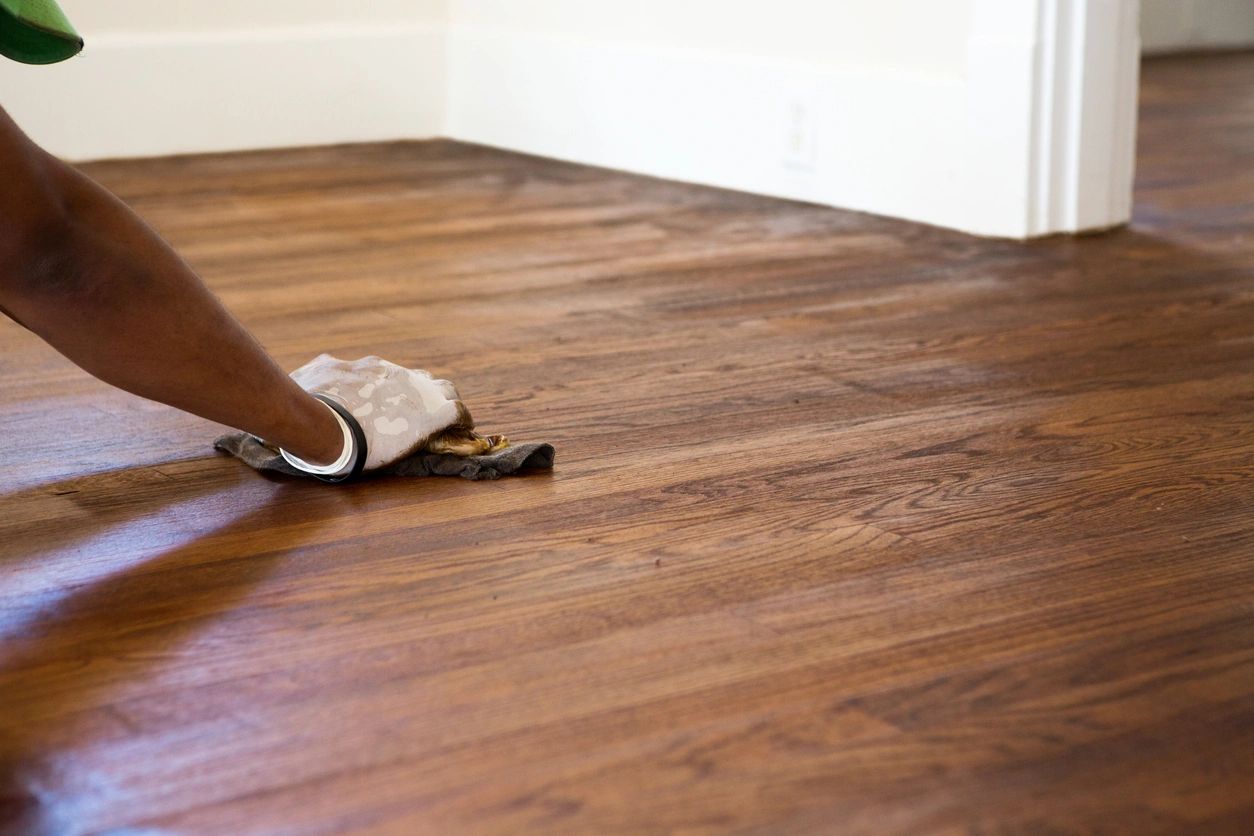
4. Working while your carpet is still damp, begin applying the dye by spraying along the perimeter of the area then work inward. For best blending of one work area into another, it’s better to do a random edge than a straight edge so you don’t end up with heavy overlapping lines. Sometimes I’m able to get really good coverage with the sprayer, but most times I go back over the wet area with a gloved hand and really work it into the carpet fibers.

Note: Again, through trial and error you will figure out the right amount of spray. You’ll want your carpet thoroughly wet with dye, but over saturating could lead to, worst-case scenario, the dye seeping through the carpet and ending up on a ceiling below if you’re dyeing spaces above!

5. After you’ve finished the area, let it sit for about 15-20 minutes. This is a good time to begin clean-up. Be careful, dye will get on everything!

6. Using your steam cleaner, go over the carpet using ONLY the extraction–do not clean and/or add additional water. You want to draw out as much dye and moisture as you can.

Note: This is a messy business! I own my steam cleaner and would caution against using a rented or borrowed machine to do this, as the dye may stain the machine and if not cleaned properly it will transfer dye to the next surface cleaned!

7. If you see any areas that are obviously lighter than others, now is the time to do a light application to those areas. (Repeat the wait/extract process).

8. You are now done! Allow the carpet to dry thoroughly before use. Directing fans to blow across the carpet will help speed up the process.

Note: If your space is very humid, the dye can continue to leech onto your skin or any fabrics placed on it until completely dried.

9. Clean your steam cleaner to ensure no transfer occurs with next use.

Allow your dye to settle into the carpet fibers for a couple weeks. At that point you’ll either discover you need to do another application (perhaps not as heavily applied) or that you’re quite pleased with the results and are calling it a success. Great, but you’re not done, yet…

I highly suggest pulling your steam cleaner out and cleaning your carpets with just water. Again, be judicious with the amount of water you apply and do not over-saturate them. You will pull off some color, and that’s a good thing…it will help reduce the amount of dye transfer in the future.

I’ve dyed large areas of carpet and even when the actual carpet looked worn down, the dye was still looking good. I believe the last large-scale dye job lasted a good five years!

For now, the trailer carpets are refreshed and ready to go–maybe not another 24 years, but until I get a bump in my budget and/or we want to tackle replacement. For now, I have a few more items to do before I burn through my budget…I’ll share those, too!

Let me know if you attempt carpet dyeing or have any questions…I’ll do my best to answer them.

Tina
Temporary Storage Solutions

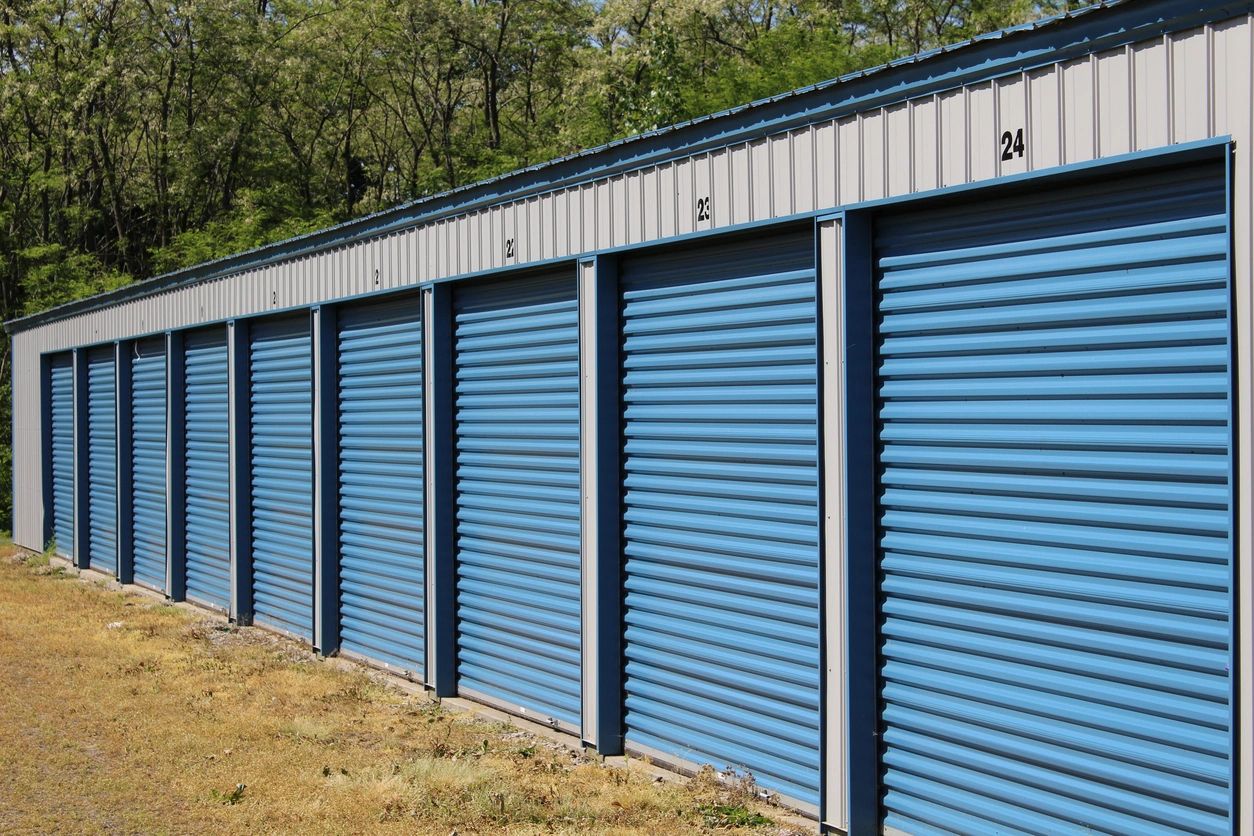
For years one of the primary objections Mike had to building again was that he absolutely didn’t want to have to move twice. Unfortunately, in some sort of fashion, we will be doing exactly that. However, when considering the option of on-site storage versus off-site storage or moving into a rental, on-site storage doesn’t seem to count as a move, even though it will have to be placed into a storage container on our land and taken from it into our permanent home! This, along with a couple other benefits, has us leaning more toward purchasing a shipping container than renting one or off-site storage space.

Your situation will probably be different than ours, but most of us face the need for temporary storage at some point in our lives. I’ll share the basics of my process to determine what is right for us, and you’ll be able to apply the concept to your own needs.

First is knowing why you need storage.

  • Do you simply have too much stuff you can’t stand to part with?
  • Do you have a child or long-term guest with belongings that need to be stored?
  • Are you selling and want to de-clutter while your home is on the market?
  • Will you be facing a gap between residences?

For us it was three of the four.

Next, determine what you want to put in storage. And, keep in mind, this can be done in phases. For instance, these are our storage needs, listed by priority:

  • To move farm equipment (yes, we had a tractor, mower, and other implements), miscellaneous benches and yard decor from our back yard.
  • To relocate some of our woodpile.
  • To have tools and equipment on-site.
  • To reduce clutter.
  • To vacate our home for new owner.

As we own our land, we believed we would simply go ahead and build a workshop/barn and that would take care of where to put things. However, that is not the case–we cannot begin building a barn until we’ve gotten a permit and started on the primary residential structure.

We returned to the list and assessed what is needed for each stage. The first stage was primarily items that have been outdoors, so most of those would be ok left outdoors. However, we needed to have some basic yard and tractor tools on hand. We considered several options, but managed to find an 8×10 metal shed for a steal!

It was trailered–intact–to the property, drug into place with the tractor, and that solved the problem of where to store tools. We are also able to keep chairs, picnic supplies, and various other items in there.

As for reducing clutter, this is an ongoing, multi-stepped task and different for everyone. We have stuff. A lot of stuff. We aren’t hoarders, but left unchecked, our stuff would overwhelm and we would appear to have a serious problem. (It’s just a little problem, really.)

Since there are so many books and websites dedicated to the art of decluttering, I’ll leave you to your own devices on that step.

Once you’ve decluttered and sorted things into the requisite keep, donate/sell and trash piles, dispense with the trash and donate/sell piles.

That leaves the keep piles. Now, I would wholeheartedly suggest you repeat the entire process with your keep piles…seriously! On second look you may realize you don’t truly want or need every item.

After you have culled your stuff, can you now store it away in your current location, in an organized manner? If so, you’ve just solved your storage needs! If not, consider the following to help figure out your storage needs:

  • Do you need it readily accessible more than once a month? If so, it probably should stay somewhere in your home or on your property.
  • Do you plan on keeping it for the foreseeable future?
  • Will it fit into storage tote bins or lockers?
  • Is it seasonal and unnecessary for up to 3 months? If so, off-site won’t be too inconvenient.
  • Is it of value and need climate controlled and/or secured storage?
  • Is it large, i.e. cars, RV, boat and best stored off-site?

(I typed this, then went to the basement to snap a couple photos…I had to delete this line: “At this point, we have our stuff under control and the next step is to sell our home.” We don’t. Our entire basement is nothing but a huge storage space!)

For us, the use of 27 gallon tote bins has been a solution to offer both immediate and long term solution for the majority of our smaller items. We have packed 50 of them so far! Everything from photo albums, to cookie cutters, to family china and seasonal decor is neatly stored and the totes stacked in our basement. We have also utilized lockers, shelves, old beer boxes, and other tote bins. However, it is my (now quite strong) opinion we need to rent an off-site unit and temporarily relocate stuff to show the true potential of the basement now rather than once we sell!

Assuming I will not win the battle to move things now, when we sell in relation to when our new home is built, we have two plans in place: If the time between moving and settling into our new home is less than four months, we will rent a large (10’x40′) offsite storage unit; if it is 4-6 months we will get an on-site 40′ shipping container; and if it is greater than 6 months (which means we’d have to sell right away and/or face a major building delay) we will purchase a 40′ shipping container and repurpose it later. Perhaps a guest house, or a man-cave? Maybe an office/studio or mini-donkey barn? Or how about a stunning pool or waterside oasis like this?

There are pros and cons to each and every solution and each situation differs. If you know you need an outside storage solution, I’d suggest first utilizing the online calculators most companies provide for determining your needs, then once you’ve decided on what size container(s) you need, create a spreadsheet, or basic list, to determine overall costs…in the end, is that stuff worth what it cost to store it? Only you can decide.

I’m Finally Learning About the Birds and the Bees!

When we decided to buy land and stay in Illinois, we knew we had to find a parcel that allowed Agricultural zoning to allow an opportunity to reduce our property taxes. We also knew we couldn’t get that zoning without producing some sort of cash crop.

We kicked around several options–raising sheep and selling their wool; raising goats for goat’s milk and related products; chickens for brooding and/or their eggs; and everyone’s current favorite, tending to bees and selling the honey and ancillary products. The sheep and goats are too smelly, too time-intensive, and just more work than I’m willing to commit to.

We enjoyed having chickens in the past and will again, but we’ve only had family/pet chickens, so we need to learn much more about keeping chickens. Since we cannot build any sort of ancillary buildings until we’ve built our home and we haven’t even gotten our final building quote, we have time on this one. However, we have to “produce” for two years before the tax savings kick in and want to get the clock started asap; that leads us right back to beekeeping.

A couple things to note: The first is I’m allergic to bee stings. Yep, anaphylactic shock and all that, but I do not plan on being the one to actually tend the hives–I’ll do the processing, selling, bookkeeping and other miscellaneous duties. And while I know a little about selling and bookkeeping, the second point is neither Mike nor I know a thing about actual beekeeping!

Around here we have learned many people simply pay a service and never actually do a thing with the bees. We entertained that idea, but realized, for us, it is only partially about the long-term tax savings (paying a service for two years while we establish our Ag status would actually double our expense right now since our taxes are based on unimproved land!); for us the other part is learning something new and becoming proficient and self-sufficient at it.

Guess what? There is SO MUCH to learn about beekeeping, but I’ve realized early on in my education it’s quite expensive to get started!

I’ve been reading non-stop about beekeeping! My head is swimming with terms like supers, screen, Queen excluder, entrance reducer, bottom and top boards–and these are just some of the parts that make up an actual beehive! Then we get into the types of hives: Langstroth, Top Bar, Warre and Slovenian or AZ. Then where do we want to keep the hives–do we want an apiary (bee yard) or if we go with the AZ hives, do we want a free-standing and moveable stand or to incorporate the hives into a hut/shed like this amazing one from Drebbieville Hives?

I haven’t even begun to dissect the various races of bees we can buy: Italian honey bees, Carniolan, Russian, Caucasian, or the generally available Mixed Stock, aka mutt bees, or the various pieces of equipment we will need to purchase, but we will learn one lesson, one attempt at a time.

We are not above admitting we are complete novices and asking for help! We welcome your guidance and constructive input any time.

The learning curve is pretty big when it comes to beekeeping and there are sure to be many future posts related to our trials and triumphs. The phrase, “God save the queen” suddenly has a new connotation for us!

Where? What? Why? How?

We have been in the throes of laying out our house, barn, outdoor living areas and making some major decisions about the interior house layout. I’ve found myself overwhelmed at times, and even downright stumped once in a while. I feel like my head is a pinball game with the ball bouncing non-stop between where, what, why, and how. I often start with one question, but find I cannot answer it until I’ve addressed another and am bounced back and forth and back and forth. At this rate I’m going to be “high scorer” in this game!

Yesterday we–meaning I, with Mike’s final approval–staked out the entire house, garage and barn. After last week’s feeble attempt at doing this alone with a 25′ tape measure, I broke down and bought a rolling tape measure.

Wow, that thing is great and prevented so many cuss words from being uttered!

As fate has it (or maybe the previous lot owners designed it), there are two trees aligned with each other at opposite sides of the lot. This allowed me to tie a string line and use it as a way point for the front of the house. Anyway…after lots of walking back and forth, sticking flags in the ground, repositioning, and remeasuring, we know where the house and barn will sit.

Suddenly the lot looks much smaller, i.e. manageable.

Nailing down the locations of our primary structures allowed us to step back and reassess where things like a garden, a greenhouse/potting shed, chicken coop and our bee boxes will go, but I’m starting to doubt I’ll ever have the opportunity for mini donkeys because I don’t see a place to locate them. That’s a discussion for another day.

We also decided since the primary reason for buying the lot was the view of the pond and adjoining river, we will move the fire pit and create a little picnic pavilion to take advantage of the view.

You’d think I’m feeling pretty great about all this now, right? Yes, but…

With this step done, I turned back to finalizing interior house details so we can wrap things up with the architect.

The BIG decision I cannot seem to make is regarding the fireplace. For now, I’ve had it taken off the plan, but after spending two hours on Houzz and Pinterest this morning (oh, what a love-hate relationship I have with them!), I think I’ve come to my final decision. Let me tell you why it’s been such an issue.

My style is a combination of things, but pretty heavy on the French country. I’ve always loved both limestone and the idea of a hearth room/fireplace in the kitchen. We found a beautiful double-sided gas fireplace and were going to center it in the opening between the family room and kitchen. Something like this:

Pretty, right? Yes and it makes my heart sing. However, there are pros and cons.

First the pros: It’s gorgeous and unique; it allows for a cozy little seating/dining area; I could create a little cubby with doors and have my own little tv in the kitchen; and letting bread rise in the kitchen would be convenient.

The cons: I’m always hot when working in the kitchen and there is no way to heat only one side of the fireplace; with one side of the family room open to the foyer and the other mostly glass to take advantage of the view, and our distaste of a huge tv over the fireplace, this would mean three focal points (fireplace, tv, and view) and create a furniture placement headache; because of kitchen cabinetry, it wouldn’t be as open as I envisioned and has the potential to cut off guests from one another or create bottlenecks in the doorways; and it does reduce kitchen size.

Stuck on this decision, I turned back to the kitchen layout. It was then I panicked because I’ve chosen a 48″ range with side-by-side ovens and on single all-freezer and all-refrigerator units versus a combo unit, like pictured below. This kitchen layout is absolutely perfect for the way I cook and entertain!

However, when I placed the dimensions of each onto my plan, I froze: there remained no counter space along the appliance wall! How did I not notice this and now what? I stared and stared at the plan in disbelief. I really have my heart set on this Hallman range and do not want to reconfigure everything again!

No matter how I moved things around, I simply couldn’t find a way to incorporate all I want/need. I shot off a quick email to the architect asking for an appointment with the kitchen designer. I then realized the measurement I was putting on paper was not the wall measurement, but the center island! Oh my, I think I’ve reached my saturation point. Going back–with the right measurement–all is well. Now back to the fireplace…

As much as I don’t want to lose the uniqueness of having a double-sided fireplace divider, I know it isn’t what will work best for us. Decision made. We will locate the fireplace at the wall opposite the kitchen, which gives me/guests a clear sight-line to the fireplace and out to the back. We will flank the fireplace with built-ins and place the tv on an extending/swiveling mount. Here are a couple ideas I like:

And my favorite–just look at that gorgeous stone! It’s a double-sided, but would be beautiful as a regular fireplace, too.

I can still create a cozy sitting area in the kitchen between the island and family room, thereby increasing seating capacity without isolation, and I will have more options with furniture layout in the family room. Additionally, I now have the opportunity to unite the foyer and family room by cladding one of the stairwell walls in limestone which will match the limestone of the fireplace. Feeling good about this decision! Now to let the architect know there is another change to the plan. My final change. Maybe.

This home/homestead is full of opportunities, but is also a study in flexibility and concessions. And, even humility as I have to often admit my mistakes and oversights, my limitations and frustrations. However, I wouldn’t have it any other way!

I think, for now, I’m clear-minded on our vision. Check back (or sign up for email alerts) for our next update!

Homesteading…Where To Begin?

For the past several years, every property listing we looked at included a home and one or more barns and outbuildings. I often wondered why an owner would have a relatively large parcel of land, yet everything encroached on the house. Now that we’ve purchased 6 acres, I’m starting to better understand!

We knew when we moved, we wanted land and to be able to raise a garden, perhaps some chickens, maybe bees and my beloved mini-donkeys, but the thoughts never went very far, since we never managed to purchase one of those established homesteads. Now we are starting from square one and it’s a little overwhelming!

Obviously, the first step in creating a homestead from the ground up is to purchase the land. Check.

The second is to consider what limitations the land presents. In our case, we have a large pond in the back, so that is non-farmable area. Because of the adjacent river, we also have to consider floodplain areas, which in turn dictates the location of both the house and the workshop/barn. There are woods at both the front and the rear of the property, and we do not want to dispense with those; although cleaning them up is in the plan.

Now with an idea of where we can locate the house and main accessory building, the next thing to consider is what livestock and/or crops will be maintained. In order to get to that determination, we have to ask and answer two key questions:

  1. Why do we want to raise crops?
  2. What are the local, county and state regulations that may impact us?

For us, the answer to the first question is multi-parted:

A) To get an Agricultural taxation rate (saving up to 50% on our taxes)

B) To enjoy eating food grown on our own land, under controllable conditions (i.e. pesticide free) and reap the health and financial benefits

C) To be immersed in a lifestyle we enjoy

Knowing the why, we can focus on the what, based on personal desires within the boundaries of the answers to the second question.

The answers to the second question are what they are and we cannot change them, so we learn to navigate them as we go. Thus far, we have found we cannot start our workshop/barn because it’s an accessory building and without a home for it to be an accessory to, the County will not issue a permit. As we wait final plans from our builder and engineer, we continue planning without action.

We also cannot create a chicken coop and enclosure yet, because we haven’t gotten the final house and barn layout and do not know where heavy equipment will need to be traversing and/or actual location of our well and septic. While we are anxious to start a garden plot, again we must hold off until things are underway, but that allows us time to clarify what we eventually want to grow.

For now, we visit the land and I’ve turned my focus away from setting up the actual Homestead and to creating a calming woodland garden area for myself–I have a feeling it’s going to be needed throughout the building process.

Mike has been bringing over his plethora of outdoor items, tractor implements, fire pit wood (lord knows we don’t need to as we have enough from the dead wood on our property to last three lifetimes!), and anything else he can relocate right away. He spends his time mowing, clearing away dead wood and planning/setting up firepit, pond, and storage areas. He also claimed a little spot in the woods overlooking the pond for his hammock…I think he needs to do a lot more clearing before I lay in it, but then maybe that’s part of his plan.

We managed to relocate a few trees and bushes, and while a full-fledged garden is out of the picture right now, we will at least plant some tomato plants. I’ve also been investigating a few shade-loving crops to incorporate into my woodland garden–peas, lettuce, Brussel sprouts, garlic and a variety of herbs should do well. The worst part of creating a woodland garden is finding any area that isn’t root-laden, but I’m managing so far.

Each day we get clearer on what we want and where we’d like to locate accessory buildings. Unfortunately, my mini donkeys are still not on the list, but I’ll keep trying. Seriously, if I am going to tend to chickens, why not tend donkeys, too?

Progress is made one step at a time, but dreams are what fuel the progress, so I keep dreaming my way forward. Before long we will have our full-fledged N’stead homestead!

Tina

Quick Metal Accents or Refresh

As you’ll recall from my posts about the “Champagne Taste, Beer Budget Sink”, we are planning to utilize the sink in our next home. Mike’s done a great job cleaning it up, including getting the worn out stainless layer off the brass protective rim. While my plan is to use brass throughout the house–you know, it’s in again–the finish on the rim is so shiny! The look I’m going for is based around aged brass and I needed a way to reduce the glitz.

There are some aging products, but after researching them and reading reviews, and use instructions, they seemed either too messy, too complex, or just too hazardous. I came across a Pinterest article about Rub ‘n Buff and thought I’d give it a try.

I ordered one small tube on Amazon and decided to try it on one of the handles from my future butler’s pantry cabinets–I was planning to replace them anyway.

I used a soft cloth and a drop the size of a pea, rubbed it onto the silver end of the handle. I let it dry a few minutes, then buffed it a bit. It was amazing! I decided to give it a couple days, to see how it held up. It holds up very nicely–I tried scratching it off and it didn’t budge. The Antique Gold was still a little too bright for the sink rim, so I ordered a second tube, this one in Autumn Gold.

I was so impressed with the product, I decided to order more handles and apply the Rub ‘n Buff and save myself a ton of money. Unfortunately, the handles are no longer available so I reverted to replacing them…but I will be using the old, now-brass-toned, handles in the powder and utility rooms.

In addition to the handles, I’ve since applied the Rub ‘n Buff to all the silver tag holders and silver locks on the drawers–again saving a considerable amount of money over replacement.

I simply love these cabinets now and cannot wait to get our house built so they can be the jewel of the butler’s pantry!

Satisfied with the success on all the smaller items, it was finally time to apply Rub ‘n Buff to the sink edge guard. Not only did I need to reduce the shine, I wanted to match the aged brass faucet I have purchased.

It’s hard to take a decent picture of shiny things, but hopefully you can see the difference between the shiny and aged finishes.

Again, I started with a tiny drop on my cloth and rubbed it onto the brass edge guard. The Antique Gold color certainly toned down the shine, but wasn’t the tone I was going for. Once that dried, I went over the edge guard again with the Autumn Gold. It is much closer in finish, but I decided I need some black, too. I have not yet ordered the tube of black, but will get it and add a bit to the finish to be more in line with the faucet. I think the improvement is already great!

This product touts it can be “applied to anything” and while I can to attest how great it is on metal (and the accidental application onto ceramic), I cannot speak on using it on any other items. For metal, I give this a big thumbs up!

It is super easy to apply, (it does have a pretty strong odor, but it’s not long-lasting) and once it’s dry, just buff it out and it truly gives a nice natural looking metallic finish, unlike spray painting.

Officially Soon-to-be-Homesteaders!

We closed on our land this week! It’s been three months since we made the offer and time seemed to drag on forever. However, once we signed the papers and took our first steps onto our land, suddenly it felt as if time dissolved and we were home!

Our emotions were running high as we walked, re-walked, and walked again, the property. Suddenly I thought, “crap, there’s a lot of work to be done!” and started wondering if we may have had a temporary lapse of judgement! Then we settled into our chairs around the little makeshift fire pit and started talking about our plans. Definitely not a lapse of judgement–we are exactly where we both want to be at this time in our lives.

We’re not naive in taking on 6+ acres–we both grew up on acreage and had a ten-acre parcel years ago. We know the work that goes into maintaining the acreage, creating and maintaining a garden, building and maintaining outbuildings, and living a country life of simplicity…an oxymoron if ever there was one! The trade off of all that work? Serenity. Peace. Pride. Joy. Satisfaction. I could go on, but to us the word to surmise it all is contentment. It’s a wonderful feeling that not everyone gets the pleasure of knowing and we feel quite blessed.

Beyond the contentment, there is something else. There is a deep desire that speaks to the dormant pioneering spirit within. While mankind has evolved, we still retain the DNA of our past. I believe we satisfy our hunter-gatherer drive by shopping and perhaps we satisfy the adventuring pioneer spirit by taking a raw piece of land and creating a homestead. Whatever it is, we feel it deep in our souls and cannot wait to get started building anew!

We have already plotted out our driveway path through the woods, the location/orientation of the house and barn, where the kitchen garden and vegetable gardens will be created, and even picked a tree for a future treehouse (for those future grand babies we know our kids will eventually bless us with). Tomorrow we roll up our sleeves, fire up the chainsaws and start bringing our vision to life. The years of suburban living (i.e. weight gain and too much tv watching) are soon to be behind us…in the best sense of the word!

Mike and I are so excited to share our new journey with you and hope you’ll follow along as we progress on our house plans, setting up our homestead, and share our never-ending projects. While we have ideas of our own, we’re always open to advice from those who have gone before, so don’t be shy, let us hear from you!

Tina

The Top 3 Things To Know About Interior Decorating

I dare say I would be hard pressed to find a woman who doesn’t know who Joanna Gaines is and/or what Farmhouse Style is. There are a lot of men who also know, but probably not to the extent of women. For instance, Mike tells our builder I am “doing farmhouse style”, but that is quite inaccurate!

What our design–or for sake of clarity, what my design–entails is a mixture of modern farmhouse, industrial, French country with a splash of glam. Does that sound crazy? It does to Mike and our builder, but to me it simply labels the things I love in a way people can understand.

If you study Joanna’s projects closely, you’ll see, especially in more recent years, she has veered a bit from the straight-up farmhouse to a style that integrates other styles, too. Finally.

Argue with me all you want, but true old farmhouse style is built upon years of life lived in a home, a collection of finishes and furnishings and is mostly timeless. However, the current design trend of farmhouse everything is exactly that–a trend. Like all trends, it will pass. I believe it’s already starting to fade in part because of its overwhelming popularity and availability of manufactured old signs, farmhouse decor, and redundancy. This leads us to point #1.

1. By all means incorporate the latest trends into your decor, but resist the temptation to ditch everything you own and go all-in on the newest look. The risks of going all in are:

  • You end up with a look that is contrived, overdone, and frankly, looks like you simply created a shopping list and went out and bought every item that seems even remotely belonging to that trend. It’s cute, it’s trendy, but is it you? Where is your personality in it?
  • You risk investing dollars in copy-cat manufactured goods that are passe’ within a couple years. When the trend goes out of style, you have no choice but to either live with it or ditch it and start afresh with the current trend, which to me is throwing good money after bad!
  • When people talk of dated interiors, the primary culprits are big-ticket items like carpeting, flooring, appliances, and countertops. If you jump on the band wagon and make everything in your home suit one particular style trend or the color de jour, you risk becoming one of these dated homes in the future and the investment to reverse some bad decisions can be substantial.

So, how do you enjoy the most current looks without committing to it for a lifetime? Accessories are the ticket, but let’s talk about point #2–good bones–first.

2. No matter your style, if you get the foundation right, you can work with what you’ve got through several design trends. The big three to get right are below.

  • Flooring is by far one of the largest investments in your home, so getting it right is kind of a big deal. Once, before learning about interior decorating, I made some really, really bad design choices! The first was not being true to myself and instead of picking carpet I wanted and liked, I simply looked at what my in-laws had just installed, and since my husband loves green, I chose the same green carpet. Not just green, but teal green!

To this day I can walk into a house with it and know it’s from the years 1992-95. That, my friends, is an example of buying into a bad trend. The second bad choice was in this same house–I picked a vinyl tile (you know, back in the day it was the bomb) from a discount store, but I didn’t know it was a discount store with limited quantities until we needed some replacement tiles. My apologies to the people who bought our house…I just didn’t know any better.

As you make flooring choices, a good exercise is to look back over the years and see what flooring choices are still going strong and which have expired.

You cannot go wrong with hardwood flooring that can be stained and refinished multiple times, but pick a black, pre-engineered one that doesn’t allow refinishing and let me know how you feel about it in a few year. Just saying. Carpet will need to be replaced sooner than later, so you have a little more flexibility here. But, don’t do green!

  • Cabinetry is another substantial investment. Again, look at what remains timeless–primarily white and some woods–and weigh the traditional options against your own design style. Right now we have maple cabinets with eyebrow arch doors. I would have painted them white years ago, but this is our home and sometimes Mike does weigh in and this was one item he was dead-set against. I did, however, take liberties with the center island. It was at one time black, and now is a beautiful–to me anyway–shade of blue. Perhaps navy blue cabinetry or trendy colored appliances are exactly what you want, but please ask yourself how long you’re willing to commit to these choices and if you change your mind, can you paint over the finish or afford to replace? If not, get your color fix by painting your island a fun color, using trendy cabinet hardware or even lighting, along with your kitchen accessories!
  • Countertops are the ficklest item when it comes to current design! My granite is only four years old and was a must-have four years ago, but now most people are opting for Quartz, concrete or other manmade materials. Cultured marble and tile have had their moment in the sun, but don’t even register on most people’s radar these days. There are some materials I feel transcend time and trends: marble, soapstone and butcher block. Formica (laminate) is a necessity for some homeowners, but even that is swinging from the granite looks to more Quartz and marble looks. When picking countertops, unless you have the budget to replace in 5 years, I say go with the most neutral of what is currently trendy and get as much life from it as possible.

Obviously, no one thing is truly timeless and keeping a home current requires updates, but if you take care of the foundations of design, you will get far more for your money in the long run.

3. The Fluff, aka Accessories. Here is where you get to layer your basic foundation with all the fun, trendy things. However, there are a couple things to keep in mind.

  • A little goes a long way. If you’ve been into a Michael’s or Hobby Lobby lately, you can’t turn around without being bombarded with farmhouse stuff. I mean it’s like a serious population explosion!

Do you need those buffalo check pillows, the farm truck pillows and the donkey pillows, along with the buffalo check throw, the sixteen farmhouse/eggs/diner/believe fake porcelain signs, metal cart, chicken print plates, AND mason jar glasses all in the same space to create a farmhouse look? No, and please don’t; it’s overkill and loses its charm.

Instead, pick a couple favorite items for each area of your home. When you disperse them and integrate them into your design, you get a much more authentic and genuinely pleasing look.

  • I cannot tell you the number of design clients I’ve had over the years who ask, “Is it ok to put this with that?” I’ve never been one to shy away from mixing colors, patterns and textures, but for most people this seems quite foreign. (The first shop I did work for was called Plaids & Stripes–I think that in itself is what drew me to them, as I got the impression they loved good design and weren’t slaves to the shoulds.)

So let’s talk about what works together: If you like it, it has special meaning to you, and/or you cannot replace it, then it can work! My education is in fashion design, so when I need to communicate past a client’s bias toward mixing styles, colors, patterns, etc. I bring it back to getting dressed.

When you dress, you generally put on pants–or your foundation color. Then picking out a blouse or shirt is easy…you find one you like, feel good in, or that compliments the pants. You may now want to add a sweater, vest, jacket or shawl. Again, you make your choice on what complements what you’ve already pulled together. From there, you add shoes–maybe even complementary socks or hose–and a tie or jewelry.

Most of us manage to appropriately dress every day, so applying the same mindset to interior decor makes it far less daunting. Now, if you’re one of those people who love two-tone shoes with stripe pants, a floral shirt, plaid jacket and paisley tie…you may want to hire a professional for some guidance. Otherwise, create your space to reflect your lifestyle and your preferences and you will find it to be a comfortable environment for you and your family!

And let’s be real here, you’re going to make some questionable choices–as do I from time to time–but, if you err on the side of caution and make those choices with regard to accent items rather than foundational ones, you’ll look back at them in the same way you do a bad haircut: it really was fashionable at some time, but thank goodness you’ve outgrown that fashion statement!

Have fun, relax, and surround yourself with the things you love.

Not Your Mama’s Mac ‘n Cheese!

I don’t know about you, but in the world of comfort foods, a good mac ‘n cheese ranks in my top 5. There are many mac ‘n cheese traditionalist who want macaroni and cheese. Period. Nothing fancy, nothing weird, just simple, true-to-its-name and there is no room for discussion or experimentation. If this is you, you may as well stop reading now, because this recipe is anything but regular.

A few nights ago I had planned on making something specific for dinner, then realized I didn’t have all the ingredients, but also no time to run out, so I had to improvise with what I had. Of course I turned to Pinterest and Google and the recipe I came across fit the bill and ended up being a surprisingly wonderful dish we can’t wait to have again! In fact, our son was here and walking out the door to head home when I pulled the finished dish from the oven–he stayed and had 3 servings!

Officially, this recipe is called Fiesta Chicken Casserole and it’s from Together as Family. Here is the link to the original and printable recipe and be sure to check out this blog–so many great recipes!

I did add a little hot sauce and chili powder (indicated by “optional” ingredients) because I’ve found when cooking with cheese, sour creme and chicken, the flavors can become a bit muted. I do not like spicy food and didn’t feel the heat at all, but just a nice complimentary flavor.

For this tasty mac ‘n cheese you will need these ingredients:

  • 2 cups shredded/cut rotisserie chicken
  • 1 cup sour cream
  • 1 cup salsa
  • 1 teaspoon cumin
  • 1 teaspoon garlic powder
  • 1 teaspoon onion powder
  • 1 can (15 oz) corn (drained)–we prefer white corn around here
  • 1 can (15 oz) black beans (drained & rinsed)
  • 2 cups shredded cheese
  • Optional 1/2 tsp hot sauce (or more depending on your taste) and/or 1/2 tsp. chili powder (or, you can eliminate the cumin and chili powder and instead substitute a package of taco seasoning)
  • Garnishes: diced tomatoes, chopped green onion, sour cream
  1. Heat oven to 350 degrees. Prepare a 9×13 baking dish and spray with cooking spray. Set aside.
  2. Cook pasta according to package directions. Don’t forget to salt the pasta water. I use about 1 teaspoon salt.
  3. While pasta is cooking, combine sour cream, salsa, cumin, garlic powder, and onion powder in a large mixing bowl. Include hot sauce if you’re adding it.
  4. Drain the pasta when it’s done cooking and add into the sour cream mixture. Stir to combine. Add in the corn, black beans, chicken, and 1 cup of the shredded cheese. Stir together to combine.
  5. Pour into the baking dish and sprinkle the remaining cheese on top. Cover with tin foil and cook for 20 minutes.
  6. Take the tin foil off and let cook an additional 5 minutes. Garnish with green onions, tomato, sour cream and avocado slices if wanted.

This is by far one of the easiest and tastiest dinners to throw together! It truly didn’t last long around here!

Orbital Sander Repair–Save $25 in 10 Minutes!

Palm sanders are the work-horses of our garage! We have several, including three orbital sanders. We love having multiples because we can load each with a different grit sandpaper and switch between rough sanding and finish sanding without replacing the sandpaper discs.

What we don’t like is we have two that use the self-adhesive discs and one that uses Velcro discs. The Makita that uses the Velcro disc has been causing trouble in the work shop–there’s always one in the crowd! The Velcro pad has worn down and discs no longer adhere properly. It’s quite common to be sanding and have the disc suddenly take flight.

Mike–with his vast garage work area–brought the sander into the kitchen to take off the sanding pad/Velcro attachment area, so I thought I’d give you a quick tutorial on taking off the sanding pad and replacing it. However, things took a little turn so, instead, we’ll talk about taking it off then converting it for stick-on discs.

Start by flipping the sander on its back, then remove the three screws holding the sanding pad in place.

Once you lift the pad off the base, you’ll notice a center hub/spacer. If it comes off, just make note of how it goes back on–or if you’re like me and afraid you won’t remember how it goes back together, take pictures of each step for reference as you reassemble.

Now, we truly intended to go purchase a new $25 sanding pad–which is ridiculous when a new sander can be had for between $60-75–so if you’re changing the pad take the steps outlined. However, if you decide to convert it to a stick-pad, I don’t think you really need to take off the sanding pad…but, that’s just a guess!

Once it was apart, Mike got to thinking: it would be so much easier to purchase and use only one type of sanding discs (stick on) and since the pad is already worn, why not try to smooth it down even more?

So, we headed to the garage and he pulled out the tabletop vertical sander and sanded the sanding pad! I should have taken video because the friction of sand paper to Velcro sanding pad caused the pad to go flying several times! Once Mike wrangled it he was able to smooth the surface enough to use it for the self-adhesive discs.

If you’re going to convert your Velcro pad to a stick-on type, and you have an additional orbital sander, maybe you can put the Velcro type one (without disc on it) against another sander with a disc and sand down the Velcro pad that way…just a thought and I’m not responsible for any damage to you, your property or sanders if it all goes south!

Anyway, once the pad was smoothed out, he reversed the process, reassembled the sander, stuck on a new disc and it works like a charm. $25 saved and a nagging inconvenience put to rest!

Design a site like this with WordPress.com
Get started